

Assessments
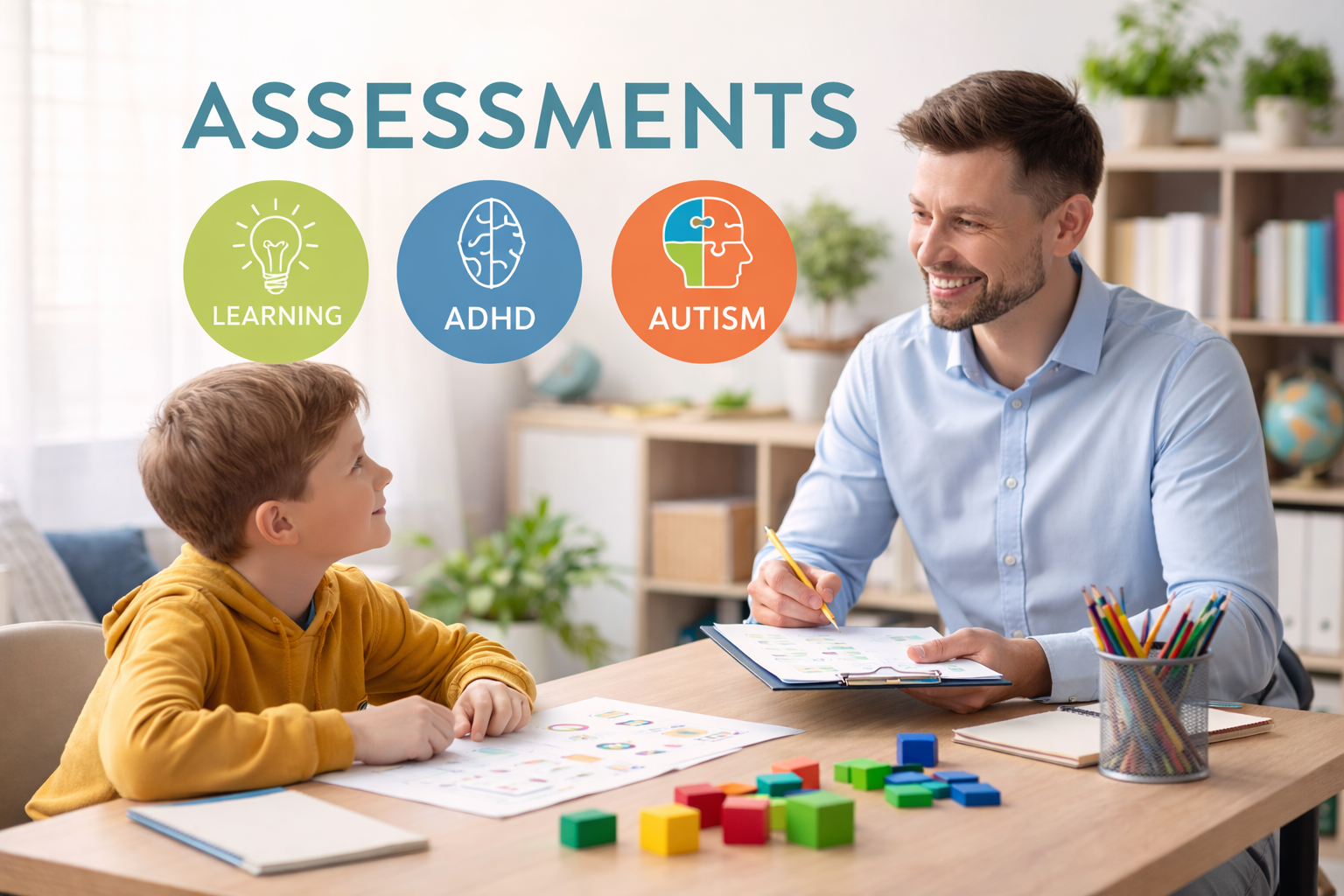
Heads and Hearts provides assessments for children and adolescents in Adelaide. Our assessments focus on developing a deep and respectful understanding of each child or young person’s unique learning profile, strengths, and differences. A thoughtful and comprehensive approach is taken, looking beyond surface-level challenges and drawing together multiple sources of information to understand how a student thinks, processes information, and experiences their learning and emotional world.
This approach is informed by Chris’ work as a psychologist and teacher with over 15 years of experience supporting children, adolescents, and their families within the education sector. His ongoing work within schools provides valuable insight into the social, emotional, and cognitive demands placed on students and the practical realities of classroom environments.
-
Often called an educational or psychoeducational assessment, a learning assessment helps build a clear picture of a child or young person’s learning strengths and challenges. It examines areas such as cognitive ability, academic achievement, executive functioning, adaptive skills, and emotional and behavioural functioning.
These assessments are typically used to identify specific learning disorders (in reading, written expression, or mathematics), attentional difficulties, developmental concerns, and adaptive functioning needs, and to inform appropriate educational supports and adjustments.
-
An autism assessment is used to better understand a child, adolescent, or adult’s social communication, sensory experiences, emotional regulation, and patterns of behaviour. It looks at how an individual interacts with others, manages change, processes information, and copes with everyday demands across home, school, or work environments.
Autism assessments are typically used to identify autism spectrum differences, clarify support needs, and guide practical recommendations, adjustments, and access to appropriate services and supports such as the NDIS.
-
An ADHD assessment is used to understand a child, adolescent, or adult’s attention, activity level, impulse control, and executive functioning skills. It explores how these areas impact learning, behaviour, emotional regulation, and day-to-day functioning across home, school, or work settings.
ADHD assessments are typically used to identify attention-related differences, clarify strengths and challenges, and guide practical strategies, adjustments, and supports to help individuals reach their potential.